
Engineered timber flooring combines a genuine timber surface with a layered base. It gives you the grain, texture and natural variation of wood, in a board designed to reduce movement as conditions change.
Real timber, built in layers
The part you see and walk on is a layer of real timber, often called the veneer, lamella or wear layer. Beneath it, bonded layers form the board’s supporting core. This is different from laminate and vinyl flooring, which typically use a printed decorative surface to create a timber look.
Solid timber flooring is milled from one piece of wood. Engineered flooring uses a layered construction to improve dimensional stability. It still responds to moisture and temperature, so good installation and everyday care remain important.
How the board is constructed
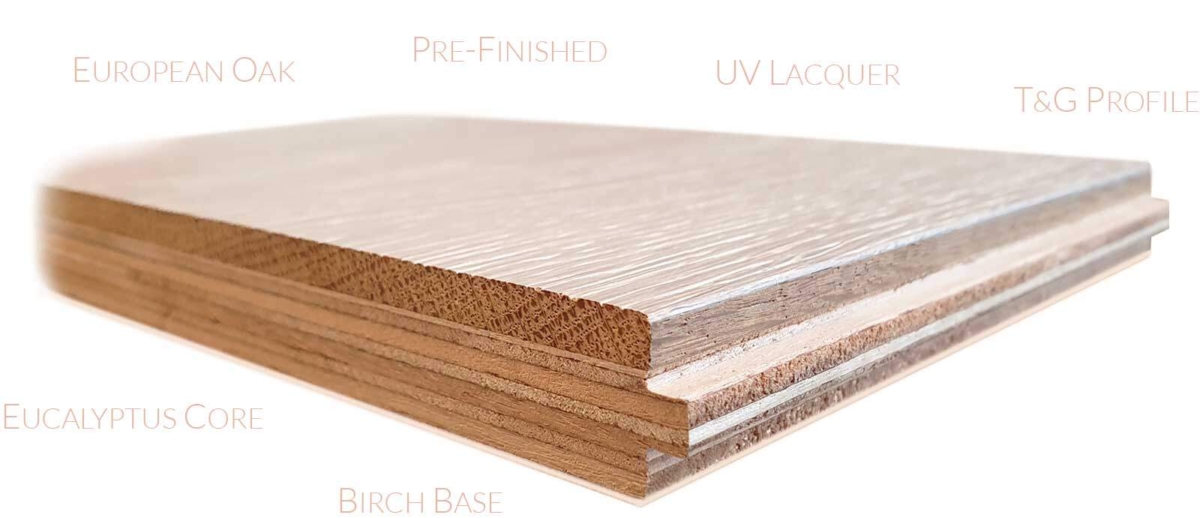
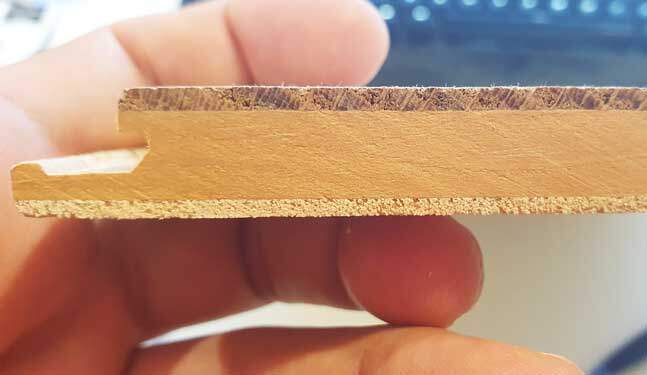
In a multilayer board, the timber wear layer is bonded to a plywood base. The grain direction changes between plywood layers, helping the board resist movement. The quality of the core, bonding and manufacturing all matter; layer count alone is not a measure of quality.
Three-layer boards have a timber surface, a core and a backing layer. Their construction varies between manufacturers. Compare the complete specification rather than assuming that one construction is always better than another.
Choosing the look of your floor
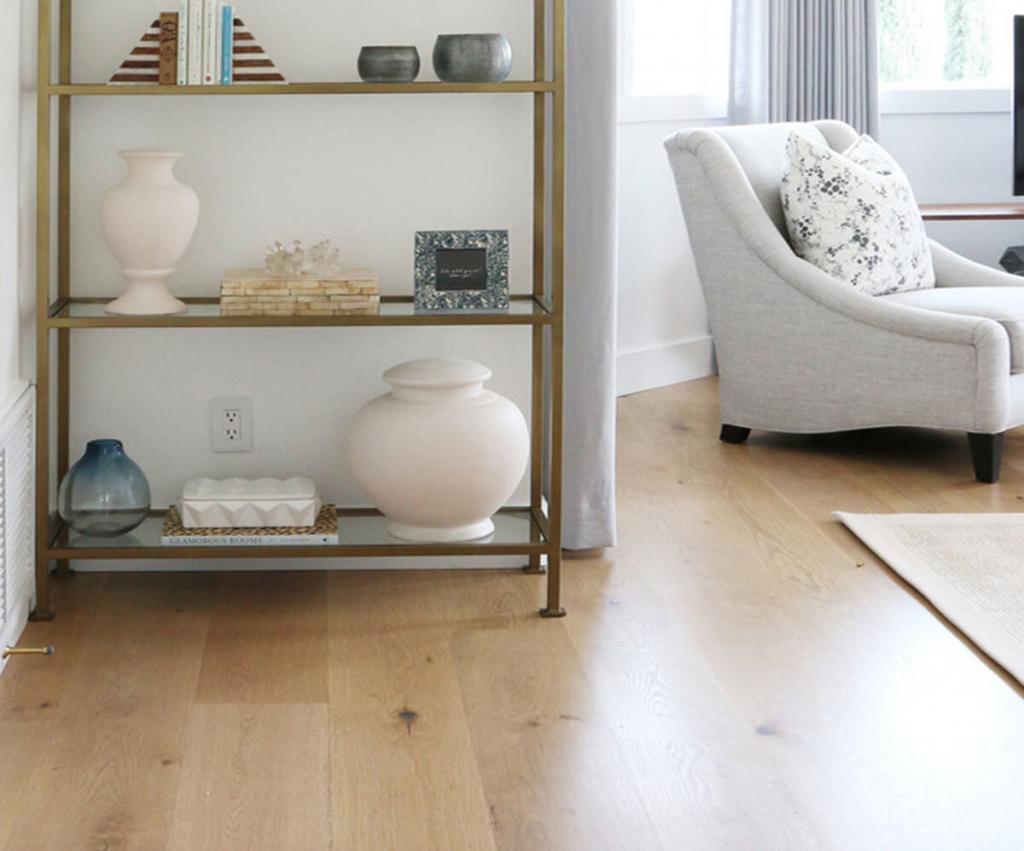
Colour is only part of the decision. Board width, length, grain, knots, surface texture and the level of sheen all influence the finished room. A cleaner grade creates a more uniform appearance, while a natural grade allows more visible character.
Wide planks show more of the timber’s grain within each board. Herringbone creates a more detailed pattern and needs additional planning and cutting. Milton Lane offers wide plank flooring and herringbone in White Wash and Natural Oak (Clear Coat). Check the individual product page for dimensions and the available finish.
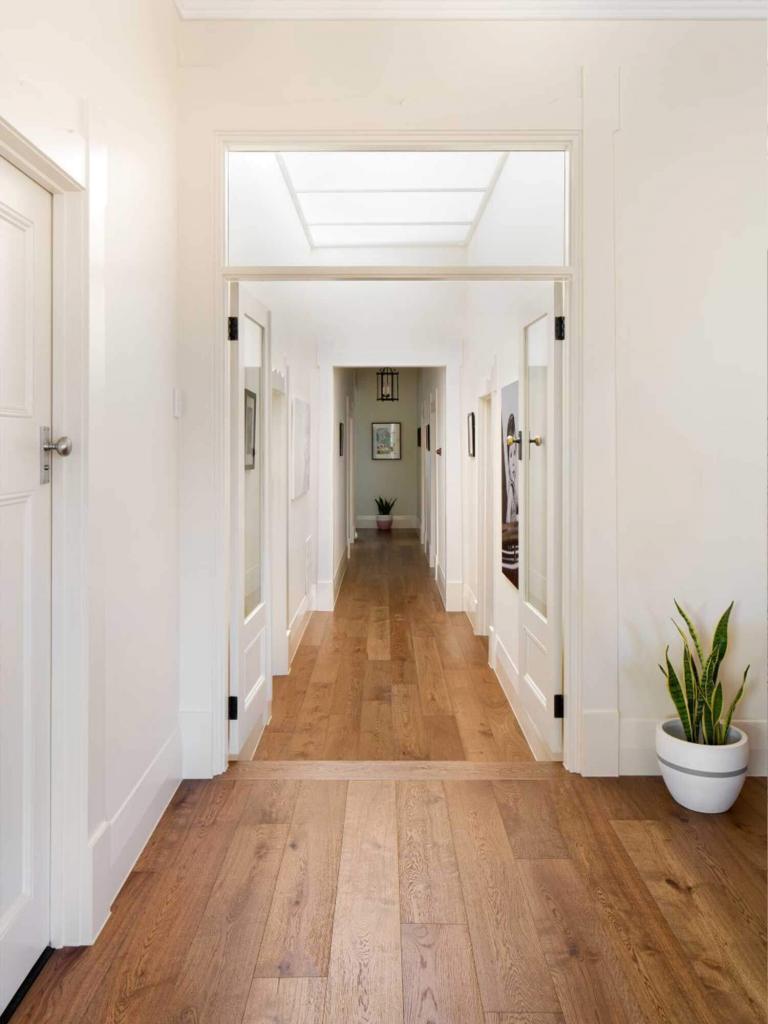
View samples in your own room, in daylight and under your evening lighting. A small sample is useful for colour and texture, but photographs of a completed floor help show the variation you can expect across a larger area.
Pre-finished or unfinished?
Pre-finished boards arrive with their surface finish applied in the factory. This avoids the on-site sanding and coating stage required by unfinished flooring. It can simplify the installation programme, although adhesives and other installation materials may still need time to cure before the floor is used.
Unfinished boards allow the colour and coating to be selected and applied on site. They can suit a tailored finish, but you need to budget for skilled finishing work, drying time and protection while the work is completed. Milton Lane’s Raw Oak option is intended for this approach.
Neither finish is maintenance-free. Choose a surface you like, understand its cleaning requirements and follow the care instructions for that particular coating.
Plan the installation before ordering
The right method depends on the board, the subfloor and the project. A floating floor sits over a suitable underlay, with the boards joined to each other. Direct-stick installation bonds the flooring to a prepared subfloor. Mechanical fixing is appropriate only where the specified flooring system and subfloor allow it.
Tongue-and-groove and click-lock describe the joint between boards, not the construction of the core. Milton Lane’s listed timber products use tongue-and-groove joints. Follow the product instructions for the correct joint adhesive and installation method.
Ask your installer to assess subfloor flatness, moisture conditions, expansion space and any acoustic requirements before work begins. Herringbone requires careful setting out and professional installation is recommended. Do not assume that a floating floor is suitable for every product or room.
Care, wear and refinishing
Engineered timber is not waterproof. Spills, persistent damp and moisture beneath the floor can cause damage. A water-resistant adhesive or core does not make the installed floor immune to water, and expansion allowances are still necessary.
Sweep or vacuum with a suitable hard-floor head, wipe up spills promptly and use the recommended cleaning products. Fit protective pads beneath furniture and avoid dragging heavy items across the surface. A well-wrung mop is preferable to leaving water on the floor; do not use steam cleaners on Milton Lane timber flooring.
The wear-layer thickness influences the options for future sanding, but it does not guarantee a fixed number of re-sands or a particular lifespan. Previous sanding, board condition, the finish and installation method also matter. Have a timber-flooring professional assess the floor before sanding; a maintenance recoat may be a more suitable option.
What to check before you buy
Compare the complete installed cost, not just the price per square metre. Subfloor preparation, adhesives or underlay, trims, delivery and finishing can all affect the final budget. A product that is cheaper to supply is not necessarily cheaper to install.
Milton Lane’s product pages and downloadable brochures explain board dimensions, veneer and finish. Use these alongside our installation and care guides to plan your floor.
Start with the colour and board style that suit your home. Explore our room gallery for inspiration, then order samples to see the natural timber tones in your own light.
Start with a sample
Compare the colour, texture and finish at home before choosing your floor. We can help you narrow down the options and check the practical details of your project.
Order samples